App Development

Mobile apps for iOS and Android, built from one codebase and shipped to both stores.

React Native and Expo by default. Swift or Kotlin when the surface area demands it. Auth, push, analytics, and store submission wired in before launch.

iOS + AndroidPush NotificationsStore-ReadyOffline Mode

We build production mobile apps end to end — from Figma wireframe to App Store and Google Play release — with the tooling we'd use on our own products.

One codebase, two stores

React Native and Expo deliver iOS and Android from a single TypeScript codebase, with native modules dropped in where it matters.

Store-ready on day one

EAS Build produces signed binaries, TestFlight and Internal Testing distribution, and metadata for App Store Connect and Google Play.

Observed in production

Sentry for crashes, PostHog or Mixpanel for usage, and OTA updates so we ship fixes without a new store review.

Mobile apps — built once, shipped to both stores

We default to React Native with Expo because it gives one codebase, fast iteration, and over-the-air updates without sacrificing native feel. When a screen needs Bluetooth, AR, custom camera pipelines, or platform-specific UX, we drop into Swift or Kotlin and bridge cleanly. Every engagement ends with two signed builds in two stores — not a repo handoff with a list of unfinished items.

Cross-platform (React Native + Expo)

TypeScript, Expo Router, EAS Build. One codebase, iOS and Android parity, fast OTA iteration.

Native iOS (Swift) when needed

SwiftUI or UIKit modules for HealthKit, ARKit, WidgetKit, or anywhere the platform API is the product.

Native Android (Kotlin) when needed

Jetpack Compose modules for Bluetooth, background work, foreground services, or deep OS hooks.

App Store + Google Play submission

App Store Connect and Play Console setup, screenshots, review notes, and first-submission shepherding.

Push notifications

OneSignal, Firebase Cloud Messaging, or APNs direct — with segmentation, deep links, and delivery analytics.

Offline mode + sync

Local-first with WatermelonDB, MMKV, or SQLite plus a sync layer that handles conflicts and reconnects.

Every app ships with

Production basics aren't optional. The list below is included in every build above MVP scope — not upsold after launch.

Login + auth

Email, Sign in with Apple, Google, and biometric (Face ID, Touch ID, Android Biometric) via Clerk, Auth0, or Supabase.

Backend integration

REST or GraphQL against your stack, or a Node and Postgres backend we build alongside the app.

Analytics

PostHog, Mixpanel, or Amplitude with a typed event schema and screen-tracking helpers in place from day one.

Crash reporting

Sentry or Bugsnag with source maps, release tagging, and a Slack channel for new crash groups.

Deep linking

Universal Links and App Links wired to your domain, with Branch or AppsFlyer if you need attribution.

CI/CD + OTA updates

EAS Build and EAS Update — or CodePush — so JS-side fixes reach users in minutes, not days.

From wireframe to store

Most apps go from Figma to a downloadable TestFlight build in three to six weeks, then through a one-to-two-week store review and polish pass. We work in weekly cycles with a shared TestFlight and Internal Testing track.

Design (Figma)

Screens, components, and flows in Figma — iOS and Android conventions, dark mode, native gestures.

Build (RN + Expo)

Weekly TestFlight and Internal Testing builds. You hold the device, we iterate.

Test (TestFlight / Internal Testing)

Closed beta with your team, then expanded testers. Crashes and feedback triaged in Sentry and Linear.

Submit (App Store + Play Store)

Metadata, screenshots, privacy manifests, data safety form, and first-review responses handled for you.

Maintain (post-launch retainer optional)

OS updates, store policy changes, new features. Retainers run monthly or per-sprint.

Portfolio

Recent mobile work

Two recent ships that exercise the full mobile surface — store distribution, cross-device sync, real-time multiplayer, and in-app economy.

Straza
Straza logo

Straza

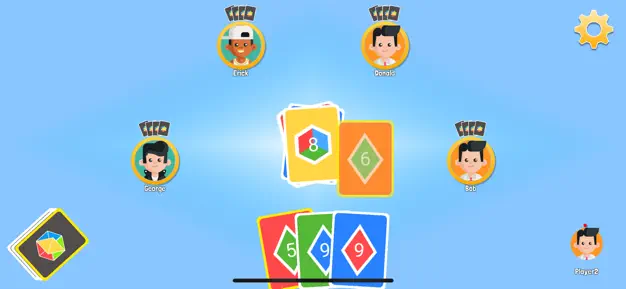
A multiplayer card game shipped to iOS and Android with turn-based combat, in-game economy, daily rewards, leaderboards, and a custom matchmaking and analytics backend. Nine months from concept to store release.

Visit site
SpySocial
SpySocial logo

SpySocial

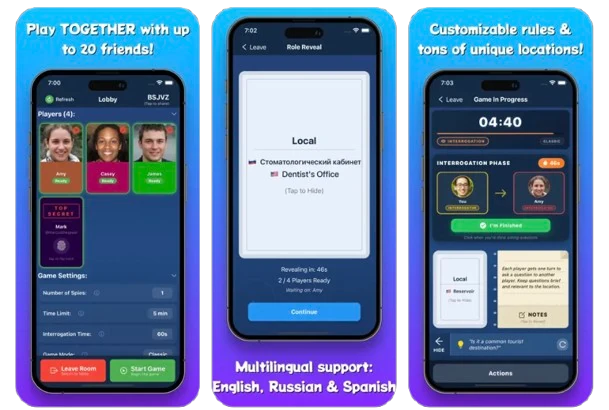
A real-time multiplayer party experience that runs cross-device — phones, tablets, and desktop in the same lobby. Private rooms, voting flows, and reconnect handling exercise the same patterns we use in production mobile builds.

Visit site

Could be your mobile app launched next.

iOS, Android, or both — send the brief and you'll have a plan and a fixed quote inside 24 hours.

Get a Free Estimate
FAQ

Common questions

React Native or native — how do you decide?
Default is React Native with Expo. We go native (Swift or Kotlin) when the app's core depends on platform APIs we can't bridge cleanly — ARKit, deep Bluetooth, custom camera pipelines, complex background work, or watch and widget surfaces. About 85% of apps we build are fully cross-platform.
Do you submit to the App Store and Google Play for us?
Yes. We set up App Store Connect and Google Play Console, prepare metadata and screenshots, complete the privacy manifest and data safety form, and respond to first-review feedback. You keep the developer accounts and final ownership.
What does post-launch look like?
OTA updates via EAS Update or CodePush ship JS-side fixes in minutes without a new store review. Native changes go through normal review. Most clients keep us on a monthly retainer for OS updates, store policy changes, and new features — billed hourly or per sprint.
Do you build the backend too?
Yes — we build the full stack when needed (Node, Postgres, Supabase, or Firebase), or we integrate with your existing REST or GraphQL API. Auth, push, analytics, and crash reporting are wired in either way.
How long from kickoff to a TestFlight build?
A focused MVP reaches TestFlight in one to two weeks. A full app with auth, multiple flows, and backend integration typically takes three to six weeks to TestFlight, then one to two weeks through store review.
Ready when you are

Have an app brief? Let's scope it.

Send the wireframes, a rough feature list, or just the idea. We'll come back with a fixed scope, timeline, and which platform path makes sense.